How Law Firms Can Search Video Evidence Instantly Using AI

1. The Growing Challenge of Video Evidence in Legal Cases
Modern legal cases increasingly rely on video evidence. Surveillance recordings, body cam footage, mobile phone videos, interview recordings, and courtroom captures are now standard components of litigation.
However, as video evidence grows, so does the burden on legal teams. Reviewing hours of footage manually is time-consuming, expensive, and prone to oversight.
Law firms frequently face:
- Hundreds of hours of raw video material
- Strict case preparation deadlines
- High billable-hour pressure
- Risk of missing critical visual evidence
Manual scrubbing is no longer sufficient. Legal professionals need structured, searchable video intelligence — not just playback.
2. Why Traditional Video Review Slows Down Case Preparation
Most legal teams review video evidence using basic media players. While these tools allow playback, they do not transform footage into analyzable data.
This creates several bottlenecks:
- Attorneys must manually log timestamps
- Evidence must be documented frame by frame
- Object occurrences are not automatically counted
- Cross-referencing video and transcript is manual
As a result, reviewing 5 hours of footage may require nearly 5 hours of attorney time — sometimes more.
In high-stakes litigation, that inefficiency directly impacts cost and preparedness.
3. The Shift to AI-Based Video Evidence Analysis
AI-powered systems such as VideoSenseAI fundamentally change how video evidence is handled.
Instead of watching footage linearly, the system:
- Analyzes the full video automatically
- Extracts frames across the entire duration
- Detects objects in each frame
- Indexes every detected item with timestamps
- Builds structured evidence tables
- Generates visual analytics
This transforms video from passive media into structured legal evidence.
To understand the technical foundation, visit our authority guide: AI Video Analysis.
4. How Law Firms Can Instantly Search Structured Video Evidence
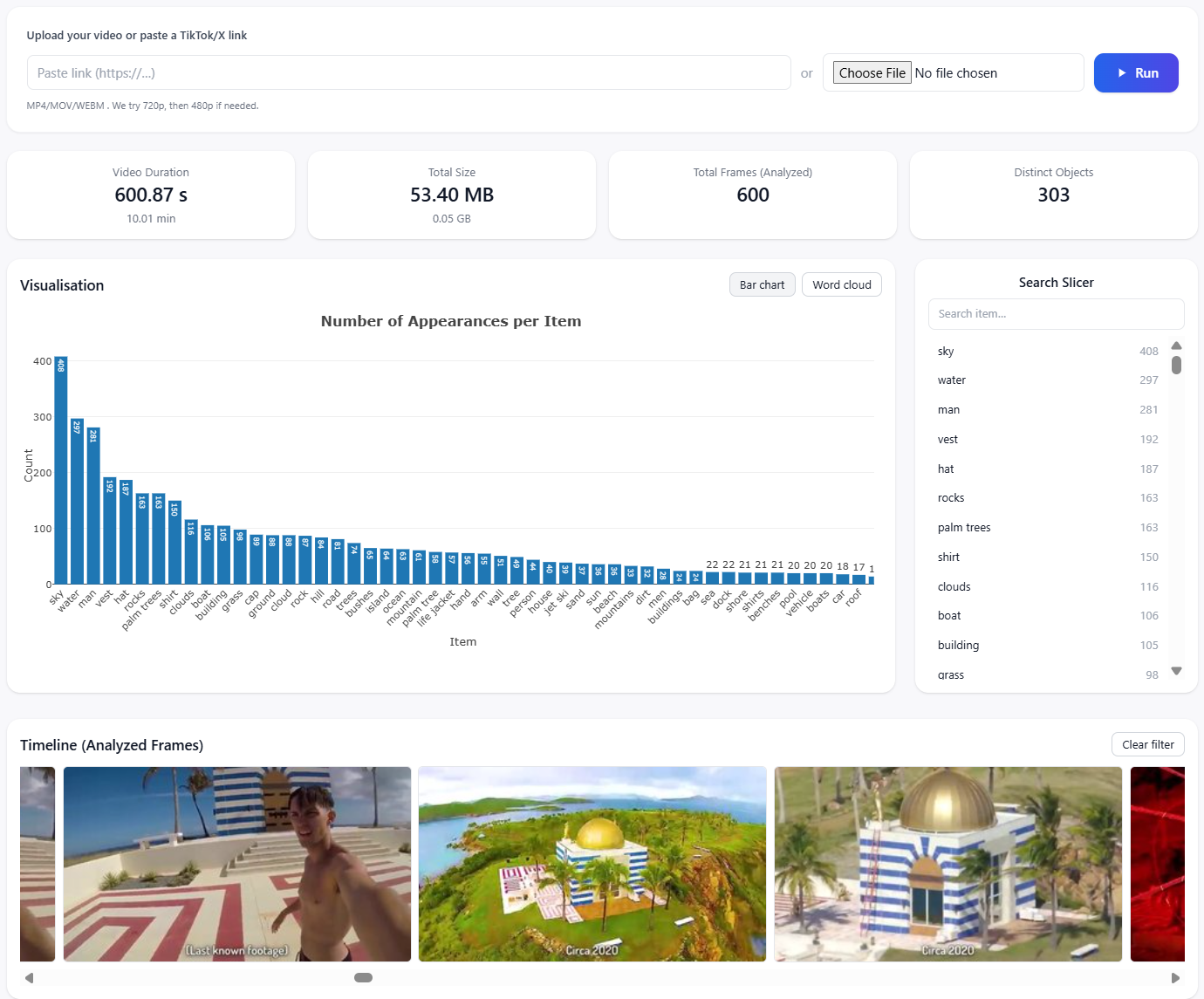
Once the video has been analyzed, legal professionals gain immediate access to:
- A ranked list of detected objects
- Frequency counts per object
- Searchable filters for detected items
- Timestamp-linked structured tables
- Timeline previews of analyzed frames
Instead of manually scanning footage, attorneys can filter results instantly and jump directly to relevant timestamps.
This functions as a structured Video Search Engine for legal evidence.
5. Transcript + Object Intelligence: A Powerful Combination
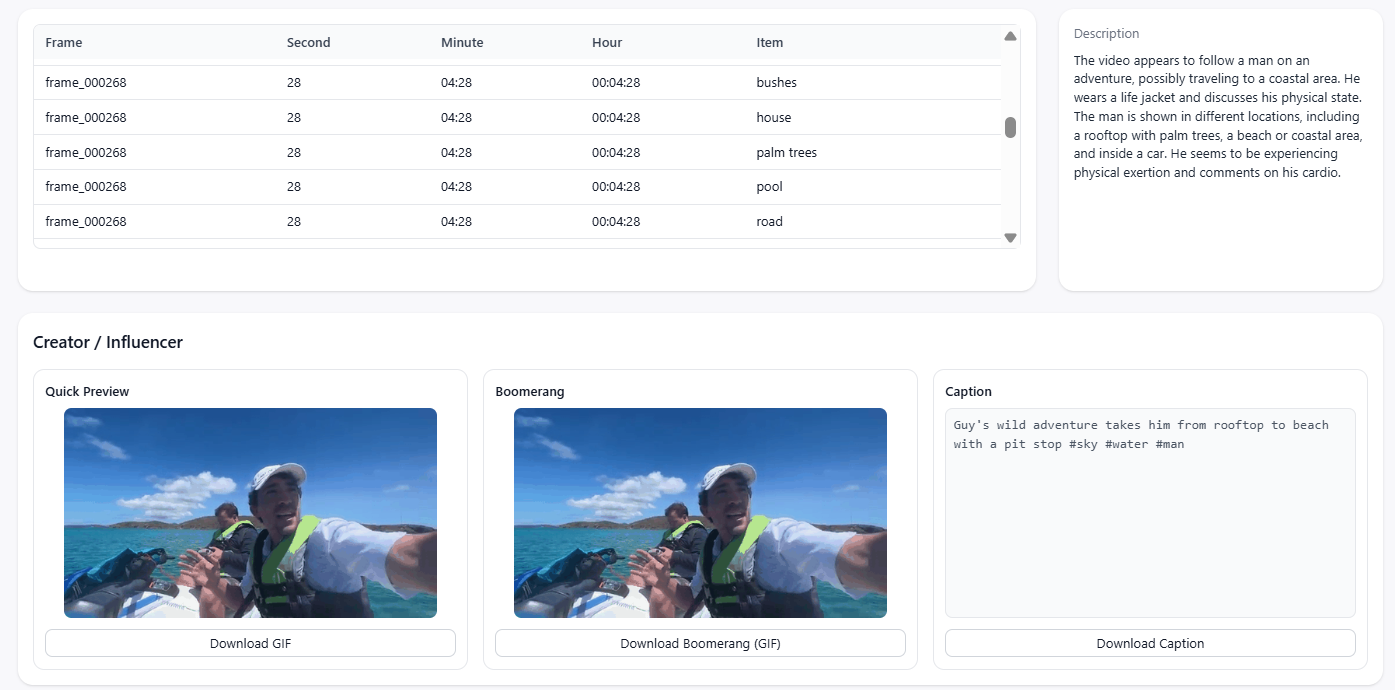
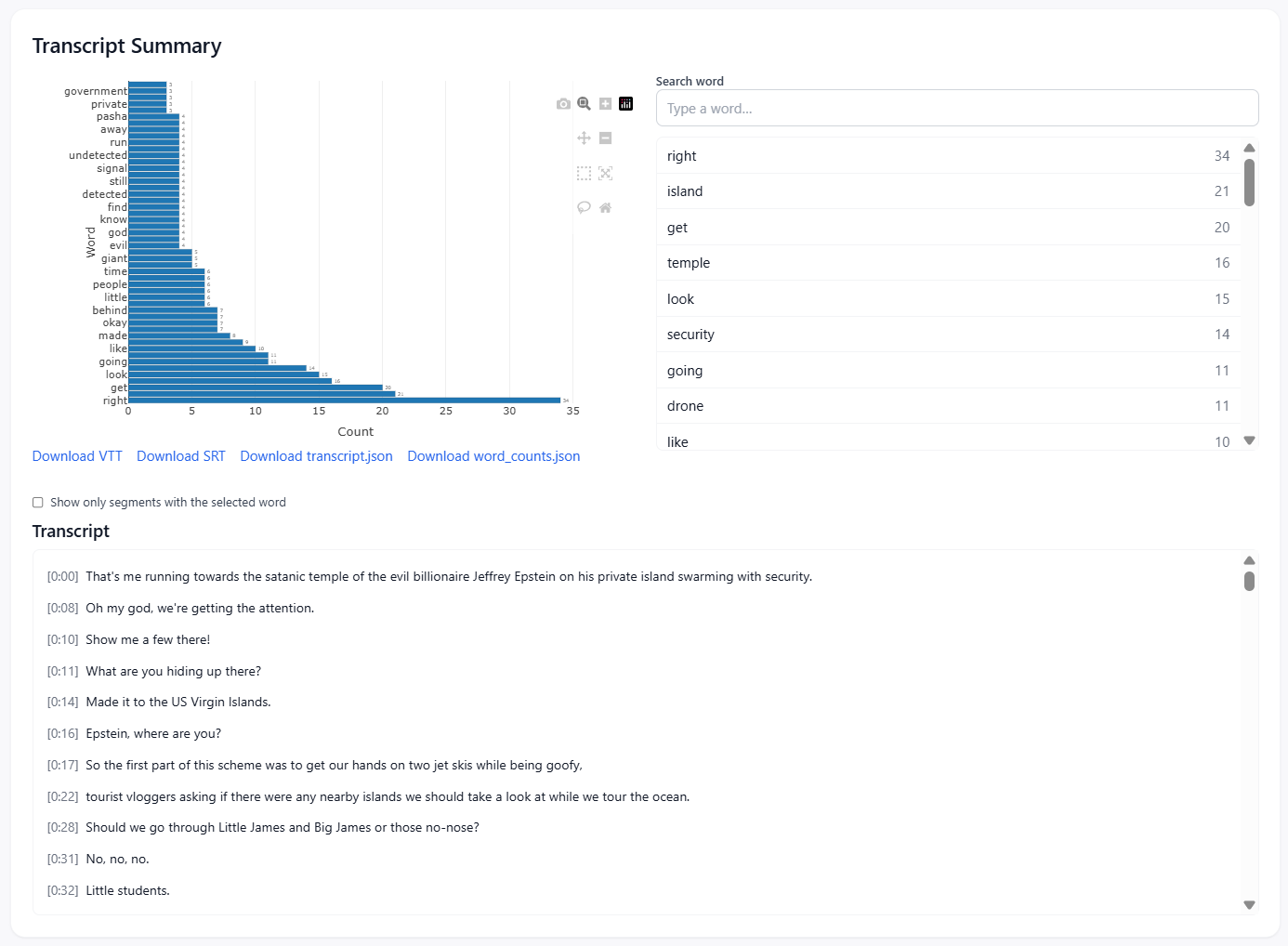
In many cases, video evidence includes audio. VideoSenseAI automatically generates:
- Full transcripts
- Word frequency analytics
- Searchable transcript segments
- Timestamp-synced transcript navigation
Legal teams can therefore:
- Identify when specific terms were spoken
- Cross-reference spoken statements with detected visual objects
- Export transcript files for documentation
This dual-layer (visual + audio) structure accelerates case preparation significantly.
6. Comparing Manual Review vs AI-Powered Legal Video Analysis
| Category | Manual Review | VideoSenseAI |
|---|---|---|
| Object Indexing | None | Automatic |
| Timestamp Structuring | Manual Notes | Frame-Level Tables |
| Searchability | Scroll & Guess | Filtered & Indexed |
| Transcript Analysis | Separate Tools | Integrated |
| Time Efficiency | Hours | Minutes |
For firms managing multiple cases simultaneously, the time savings translate directly into improved case strategy and reduced operational cost.
7. Practical Use Cases for Law Firms
AI-powered video analysis is particularly valuable in:
- Criminal defense cases
- Personal injury litigation
- Insurance disputes
- Corporate investigations
- Workplace incident reviews
By structuring footage into analyzable data, legal teams gain clearer evidence timelines and stronger preparation before trial.
8. Conclusion: From Footage to Structured Legal Evidence
Video evidence is only valuable if it can be analyzed efficiently.
VideoSenseAI transforms hours of raw footage into:
- Indexed object datasets
- Searchable timestamp tables
- Transcript intelligence
- Exportable legal documentation
Instead of manually reviewing video, law firms can move directly to structured analysis — accelerating case preparation while improving evidentiary clarity.
Learn more: